
Professional Scratch Removal: Restoring Your Vehicle's Finish in Las Vegas NV
Nothing ruins the look of a perfectly maintained vehicle faster than a highly visible scratch on the clear coat. Whether the damage happened in a crowded casino parking garage, from a careless shopping cart, or due to loose gravel kicked up on the I-15 freeway, paint damage is a constant and frustrating reality for drivers living in Las Vegas NV. Many vehicle owners assume a minor blemish will simply wash away with their next cleaning, but true surface damage always requires specialized mechanical attention.
At
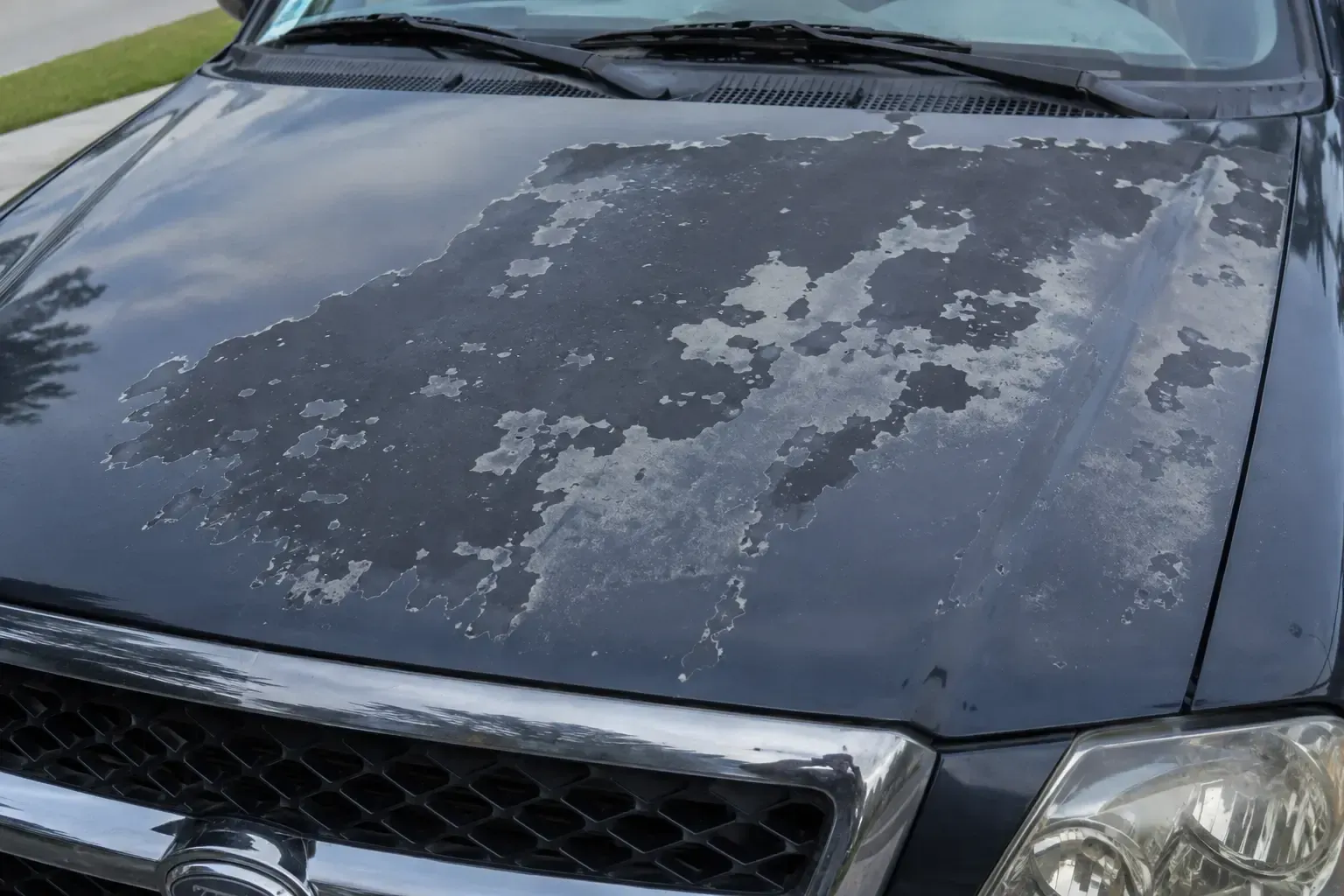
Summerlin Mobile Carwash, we see firsthand how the harsh desert environment accelerates paint degradation when scratches are left untreated. A compromised clear coat allows UV rays and contaminants to penetrate the finish. Addressing these imperfections promptly is the only way to prevent larger structural issues like clear coat failure, oxidation, and eventual rust.
Diagnosing the True Depth of Paint Imperfections
Before applying any polishing compound or spinning a buffer pad, you must understand the anatomy of your vehicle's paint system. Modern automotive finishes consist of three distinct layers applied over the bare metal or plastic panels. These layers are the primer, the base color coat, and the thick protective clear coat. The specific method required for correction depends entirely on which layer the damage has penetrated.
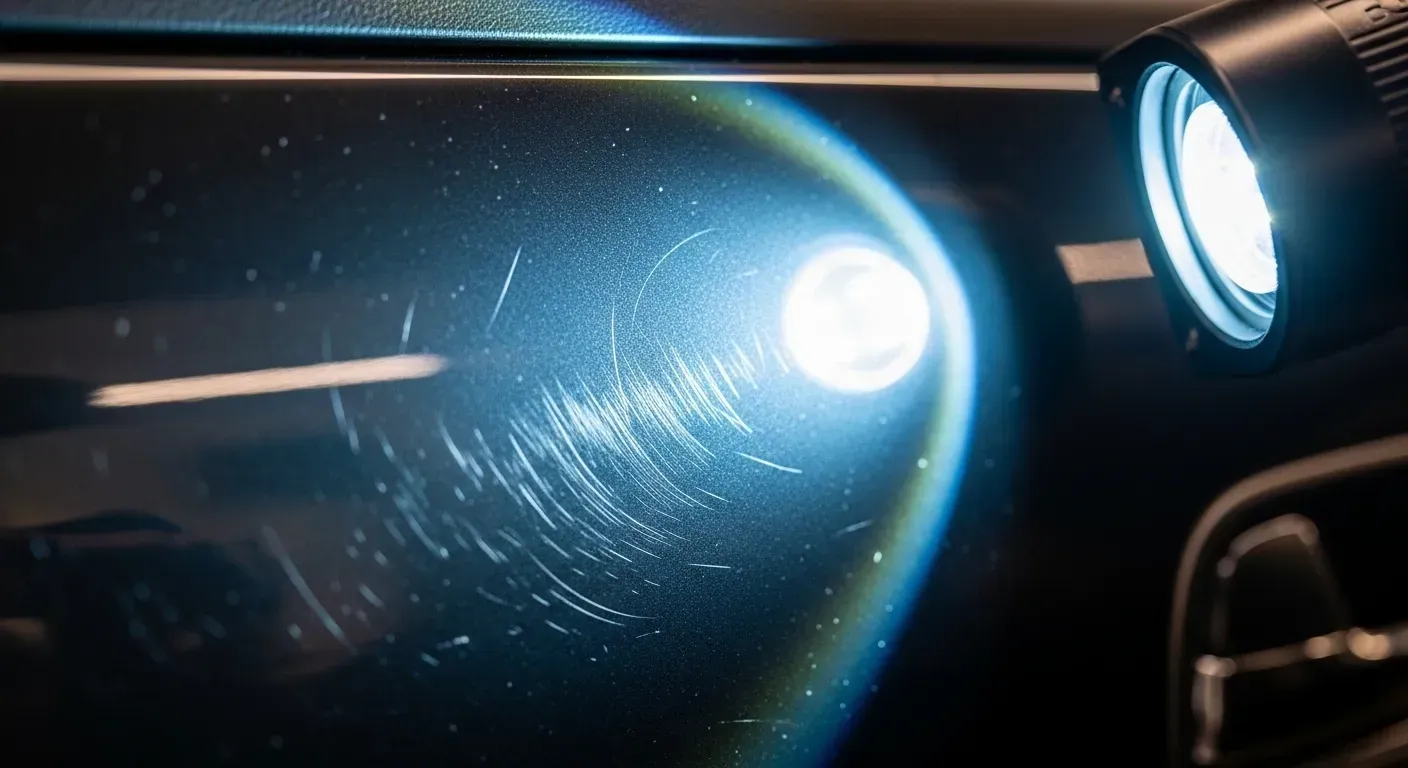
Clear coat scratches are the most common defects and the easiest to resolve. You can test this at home by gently running your fingernail across the mark. If your nail glides over the area and does not catch in a groove, the blemish resides solely in the clear coat. These minor abrasions often look like fine spider webs, wash marring, or light scuffs.
Base coat scratches occur when the physical damage breaks through the top protective layer and reaches the actual color pigmentation. You will feel a distinct physical groove when touching the affected area. Primer or bare metal scratches are the most severe category. If you look closely and see a white, gray, or metallic silver color inside the scratch channel, the physical damage has completely compromised the paint system. These deep gouges cannot be polished out and require dedicated touch-up paint or complete body shop panel respraying.
Why a Standard Car Wash Fails to Eliminate Scratches
A frequent misconception among vehicle owners is that a premium car wash will somehow buff out surface marks and restore clarity. Washing your vehicle removes loose dirt, traffic film, and environmental fallout from the surface. It does not level the clear coat, which is the necessary mechanical process required to eliminate visible scratches.
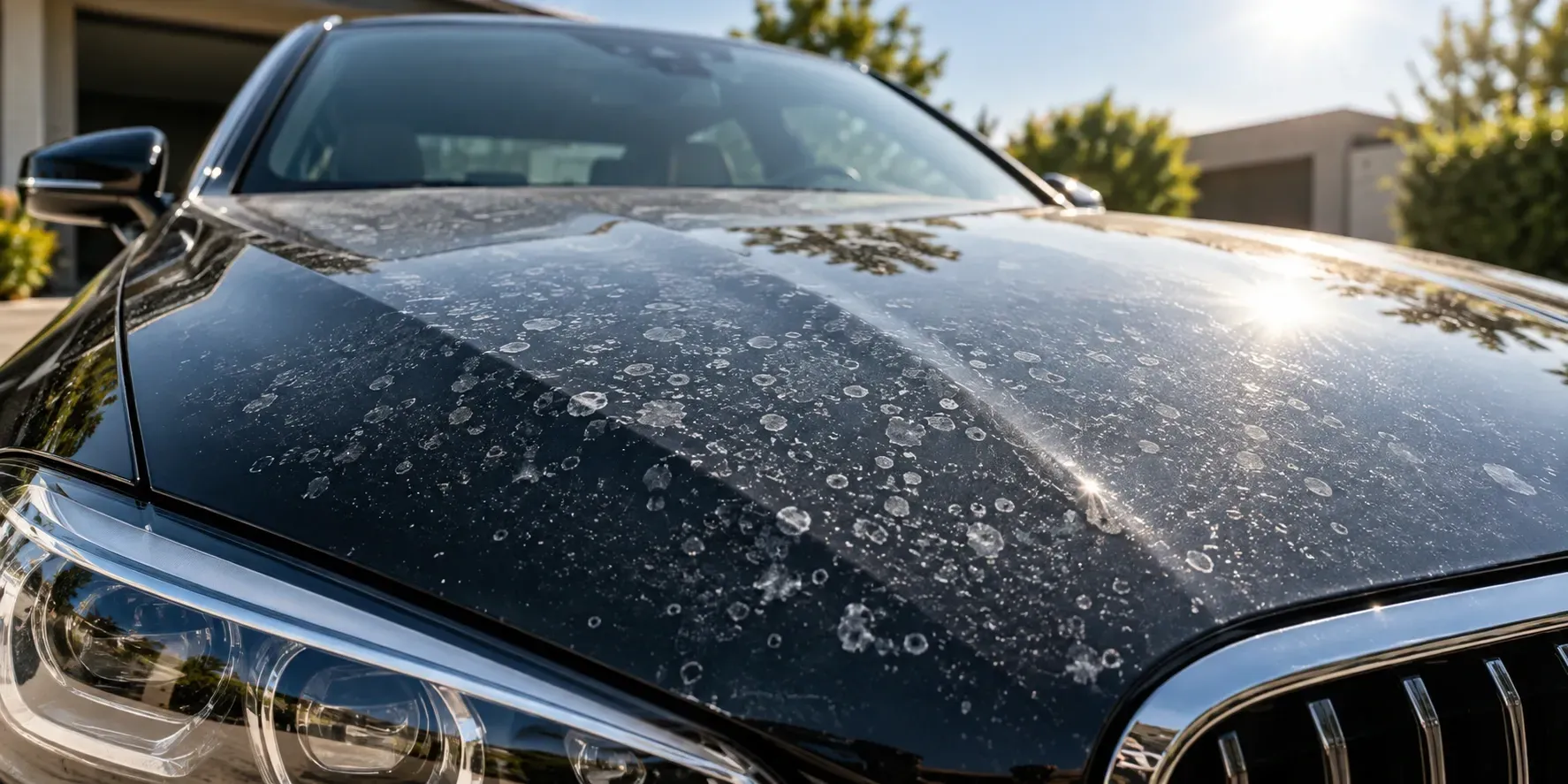
In fact, running your vehicle through an automated tunnel wash with heavy abrasive friction brushes can actually inflict thousands of micro-scratches across your vehicle. These micro-scratches are commonly referred to as swirl marks in the detailing industry. The intense Las Vegas sun then acts as a spotlight, highlighting every single swirl mark and making your paint look incredibly dull, hazy, and aged.
We previously discussed exactly how extreme desert temperatures interact with vulnerable vehicle exteriors in our detailed breakdown covering Las Vegas heat versus your paint. True scratch correction requires specialized power tools, professional-grade abrasive liquids, and highly precise techniques that go far beyond standard washing and cleaning protocols.
The Professional Approach to Paint Correction
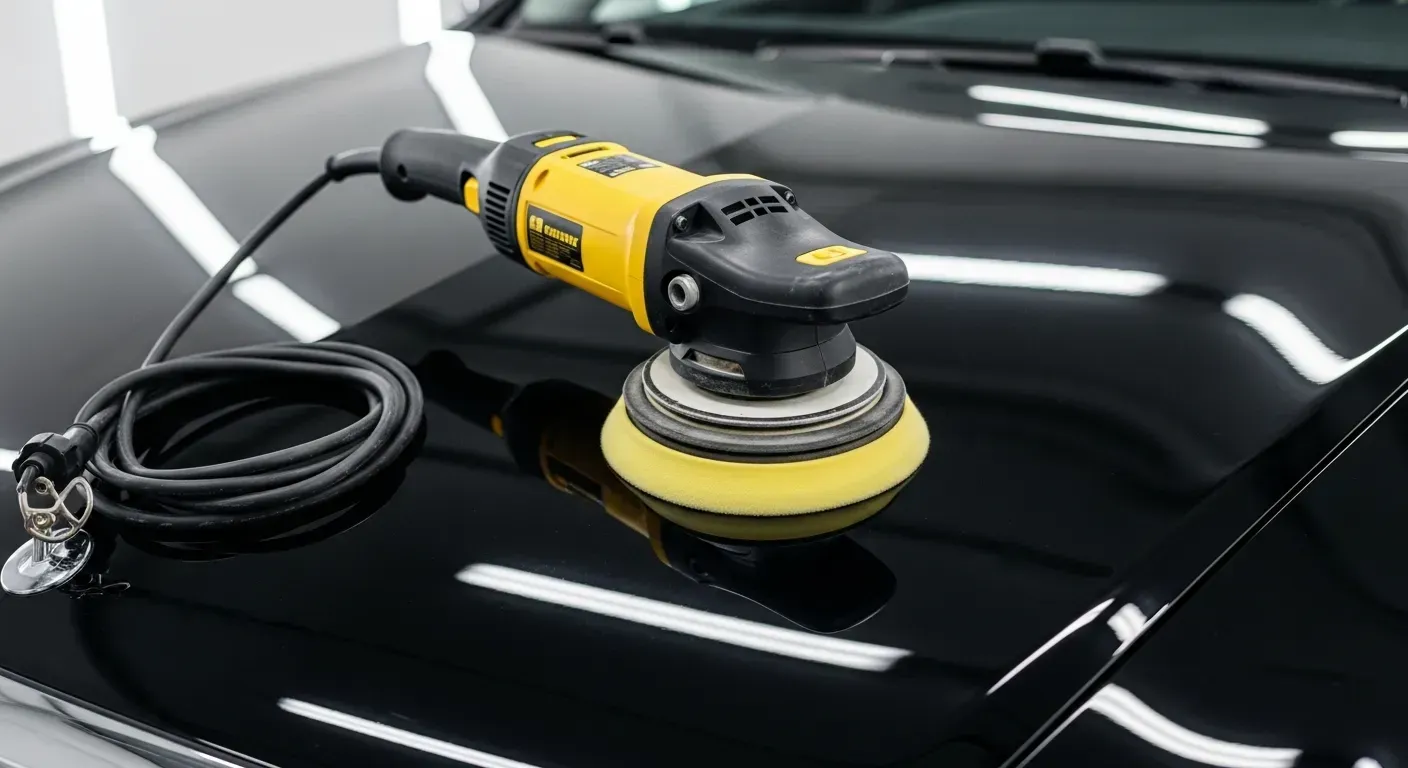
Restoring a flawless exterior finish involves a highly systematic approach to paint correction. The objective is to safely remove a microscopic layer of the surrounding clear coat until it is perfectly level with the lowest point of the scratch. This leveling process allows light to refract evenly off the surface, effectively making the scratch disappear to the human eye.
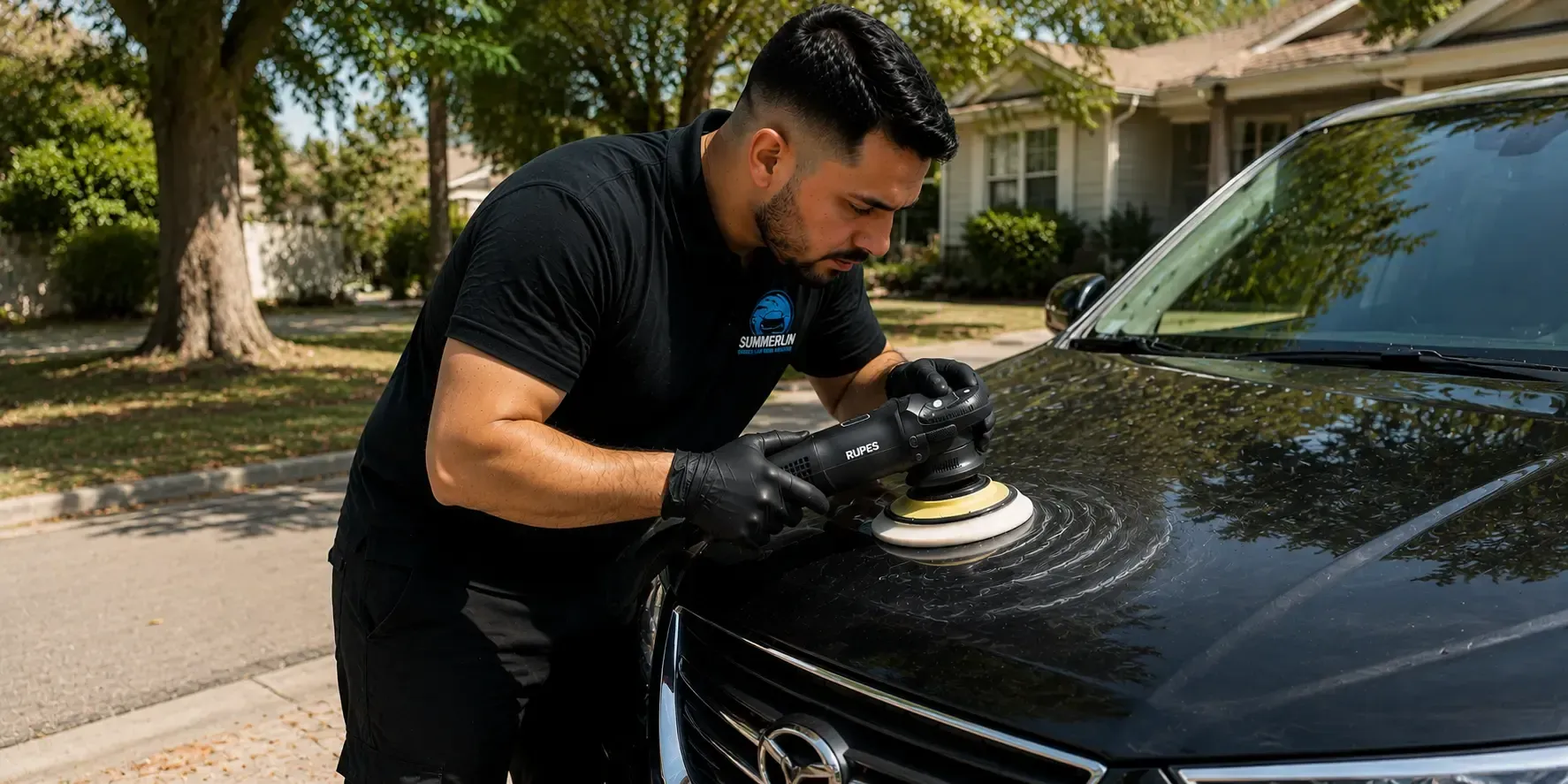
Professionals utilize several progressive techniques based on the exact severity of the defect. For light swirl marks and superficial scuffs, a finishing polish paired with a soft foam pad gently refines the surface. Moderate scratches require a more aggressive cutting compound. This liquid abrasive works in tandem with dense microfiber or wool cutting pads to level deeper clear coat damage efficiently. The most severe clear coat defects necessitate localized wet sanding. Technicians use ultra-fine grit automotive sandpaper to manually level the paint before compounding and polishing the area back to a brilliant high gloss.
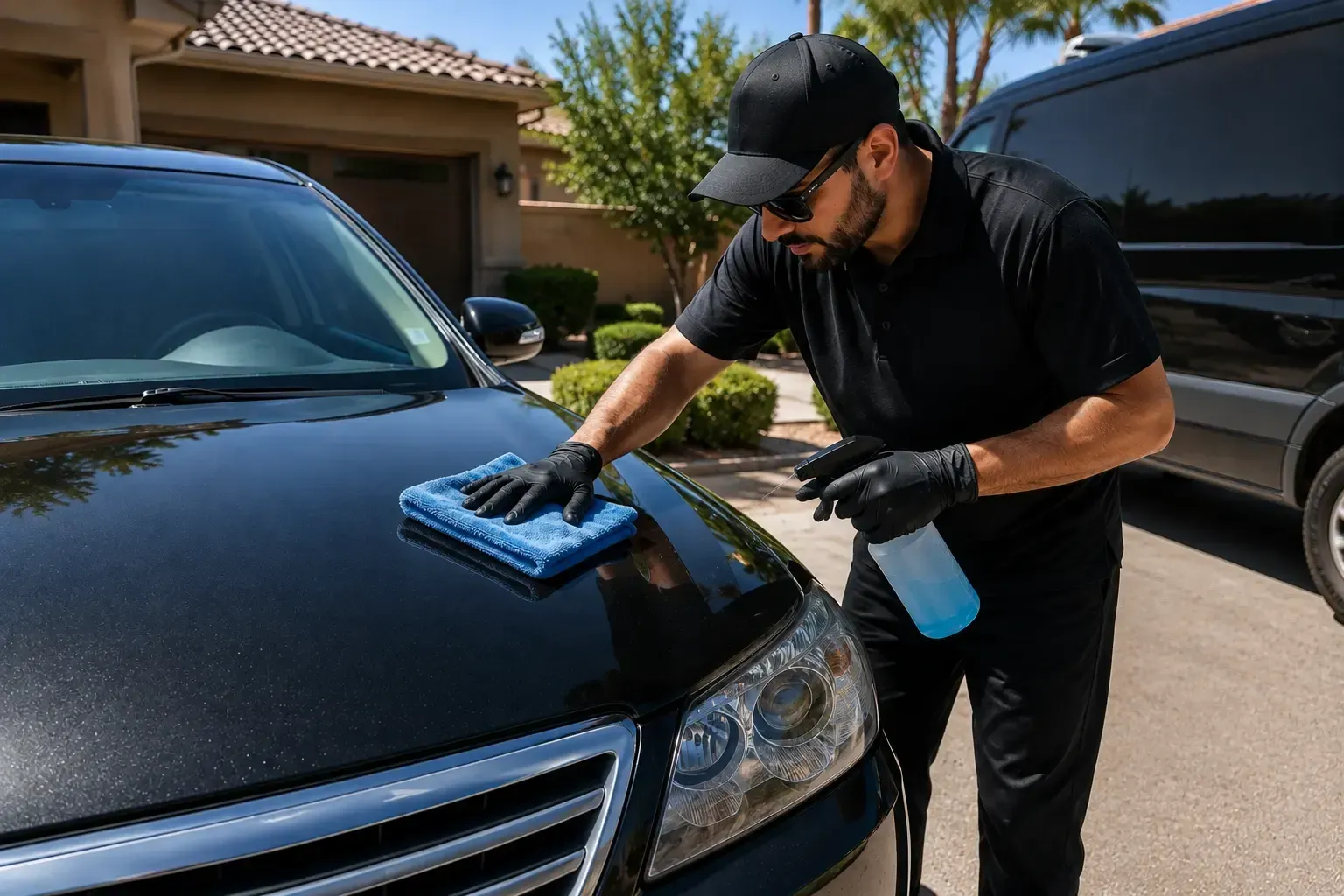
Executing these technical steps properly requires significant training and experience. Applying too much physical pressure or using the wrong machine speed can easily burn through the clear coat entirely, resulting in hundreds of dollars in paint repairs. Our dedicated scratch removal process ensures your vehicle receives the exact level of safe correction it needs. For vehicles requiring extensive overall revitalization, our premium services combine multi-stage paint correction with durable protective sealants.
Comprehensive Vehicle Protection Beyond Paint Correction
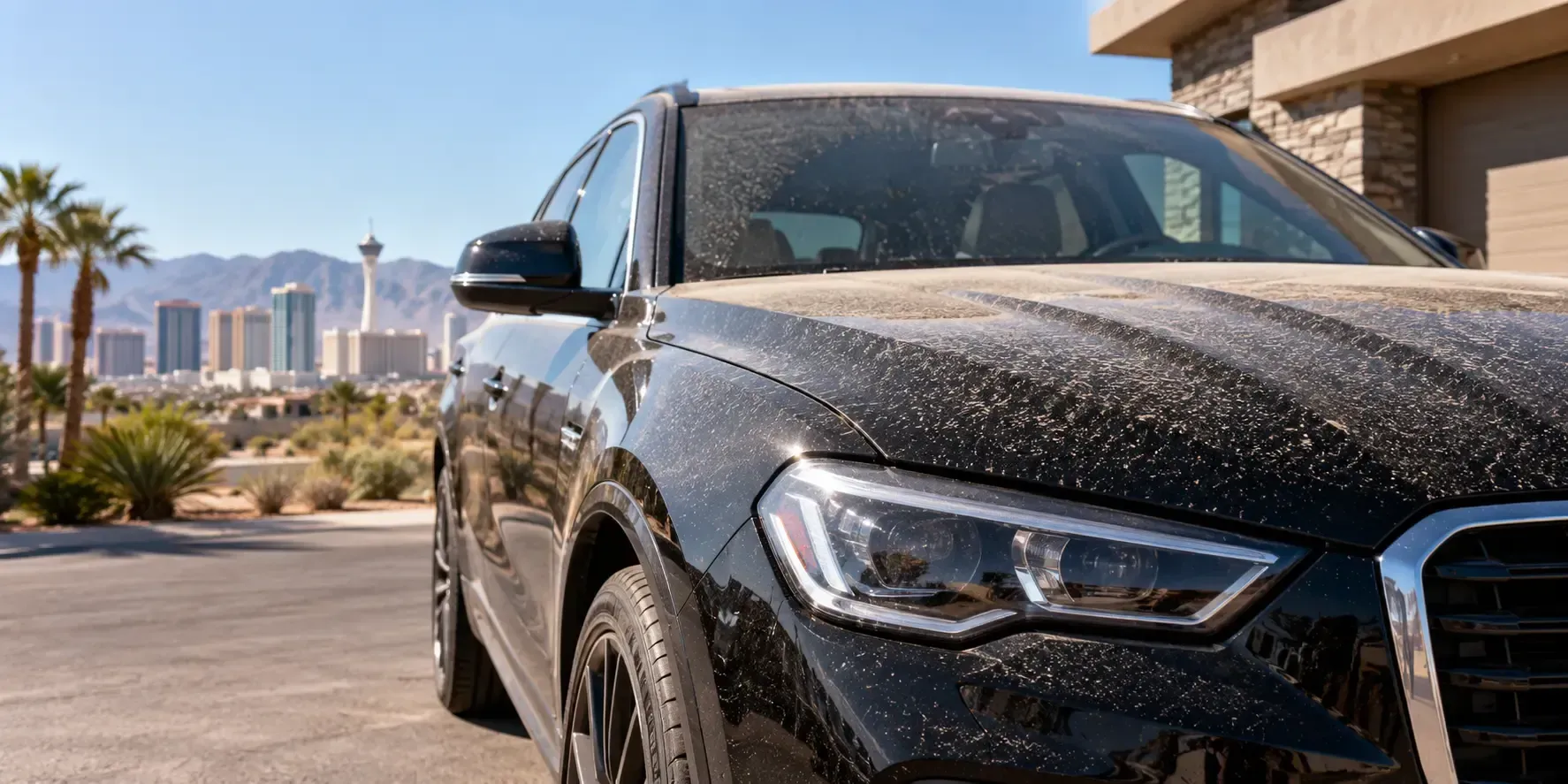
Once your paint is corrected and free of unsightly marks, protecting that pristine finish becomes the immediate priority. The Las Vegas NV climate is entirely unforgiving on automotive materials. Intense UV radiation, blowing sand, and hard water spots from lawn sprinklers constantly threaten your exterior. Applying a high-quality synthetic wax or a durable ceramic coating seals the newly leveled clear coat. This provides a necessary sacrificial layer against future environmental contaminants.
Exterior paint care is just one component of proper vehicle preservation in the desert. Interior cabins suffer immense thermal and UV damage, leading to cracked leather seating and faded plastic dashboards. Integrating professional window tint into your vehicle care routine drastically reduces interior ambient temperatures and blocks harmful radiation. A comprehensive approach to automotive care protects both your financial investment and your daily driving comfort.
Choosing the Right Detailing Team in Las Vegas NV
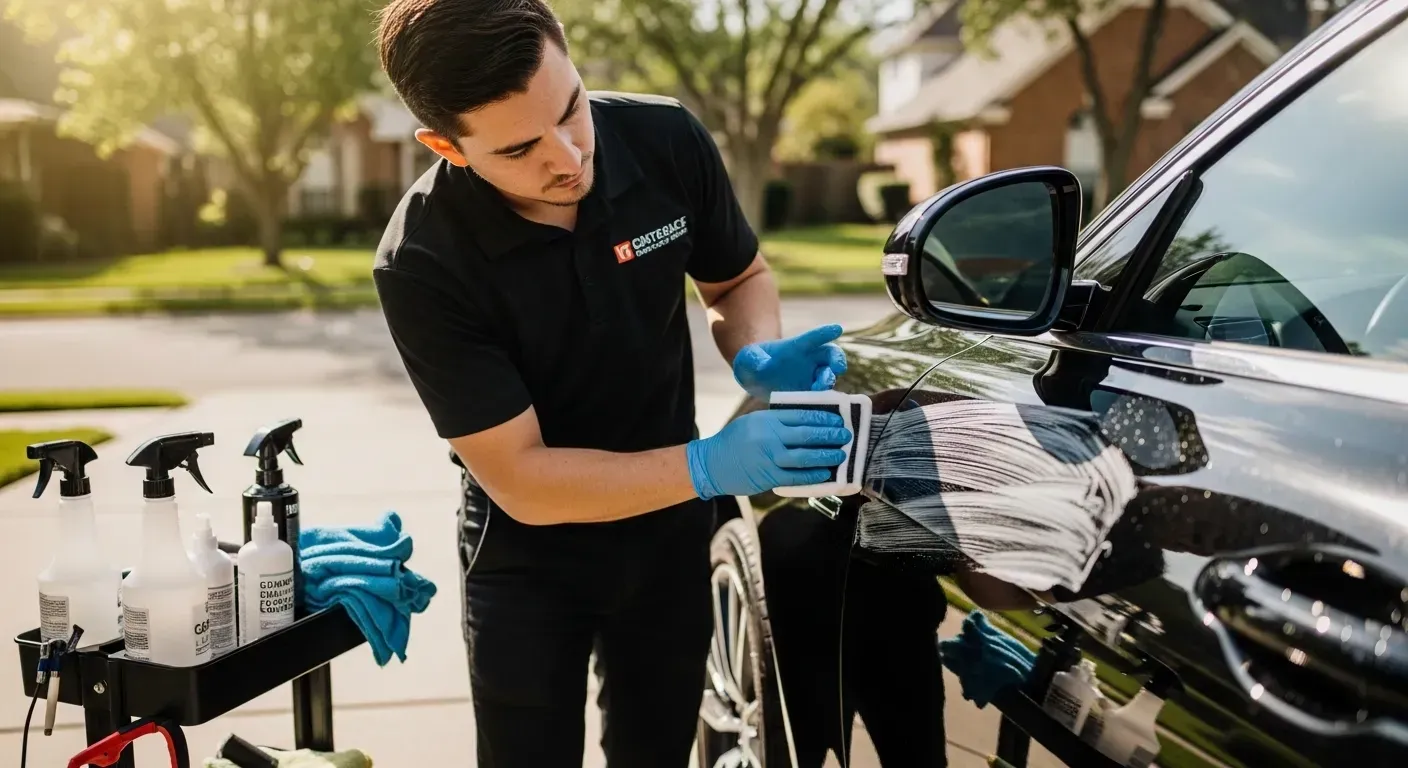
Taking a do-it-yourself approach to machine paint correction often leads to costly permanent mistakes. Holograms, buffer trails, and burnt panel edges are the common results of inexperienced machine polishing. Trusting a qualified local professional ensures your vehicle is handled with the utmost precision and safety.
Since our founding, we have focused entirely on delivering exceptional mobile detailing solutions tailored specifically to the unique needs of Nevada drivers. You can learn more about us and our strict commitment to elevating the standard of mobile auto care in the valley. We bring the expertise, spot-free water, power supply, and professional equipment directly to your driveway or office parking lot.
If you are tired of looking at door scuffs, swirl marks, or dull oxidized paint, it is time to take corrective action. Reach out to schedule a thorough paint consultation or service appointment through our contact us page.
Frequently Asked Questions
Can a deep scratch be completely removed?
A deep scratch can only be fully removed if it has not penetrated past the clear coat layer. If the scratch has reached the color base coat or the primer, machine polishing cannot safely remove it. In these cases, touch-up paint or professional body shop repainting is required to mask or fix the deep damage.
How much clear coat is removed during the polishing process?
Professional scratch removal removes a microscopic amount of the clear coat, typically measuring between one and three microns. Since a factory clear coat is usually around thirty-five to fifty microns thick, professional polishing is completely safe when performed correctly. Proper technique preserves the vast majority of your vehicle's UV protection.
Will scratch removal fix chipped paint from rocks?
No, polishing and compounding will not fix rock chips. Rock chips represent missing paint where the impact has completely shattered the clear coat and base coat. Fixing rock chips requires meticulously applying color-matched touch-up paint to fill the void, followed by careful leveling to blend the repair with the surrounding panel.